

Heads up: this guide has affiliate links. If you book through them I may earn a small commission, at no extra cost to you. It helps keep this site free. How it works
Driving in Sicily is one of the best ways to see this beautiful island, and also one of the most talked-about. Is it hard? A bit, in the cities. Is it worth it? Absolutely. In November 2023 I rented a small manual car at Catania airport with friends and drove between Catania, Syracuse and Taormina for three days. Here’s everything I wish I’d known, plus exactly what it cost.
Is driving in Sicily hard?
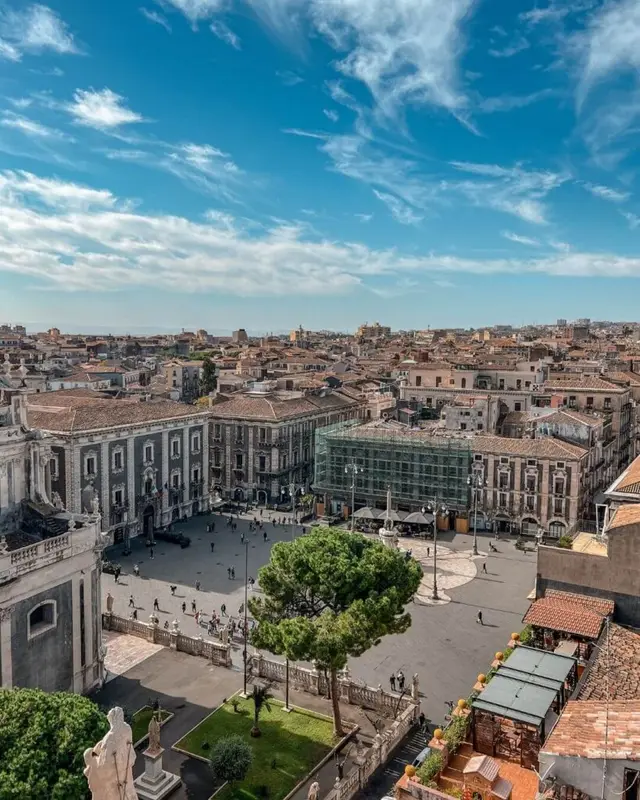
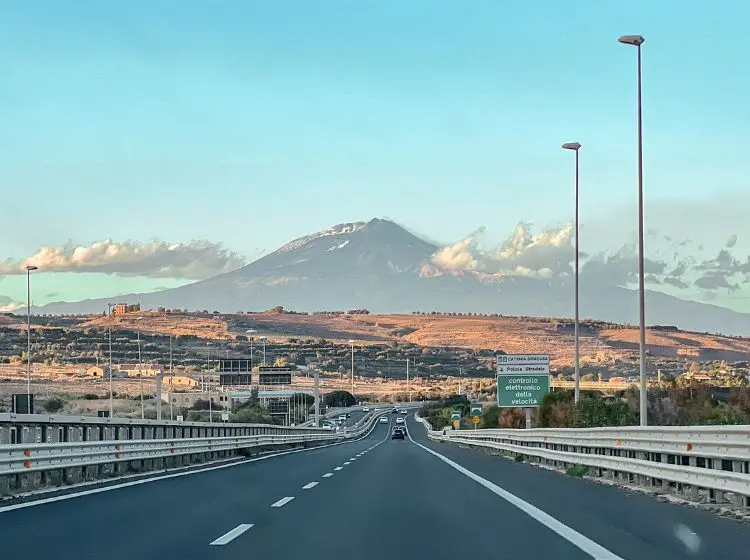
Honestly, it depends where. Driving in Catania was chaos: traffic rules there feel more like suggestions, people change lanes without warning, pedestrians walk in the middle of the road, and you need eyes everywhere. But the roads between the cities were easy. Once we were out of Catania, it was motorways, sea views and Etna in the distance.
So my advice: don’t let the city stories put you off. Be extra careful in Catania and Palermo, park as soon as you can, and enjoy the rest.
Do you need an International Driving Permit for Italy?
- EU licence: no, your normal licence is enough.
- UK photocard licence: no, according to the UK government. If you still have an old paper licence, you’ll need an IDP or a photocard. Check with your rental company too, as some ask for one anyway.
- US and most other non-EU licences: yes, you’re required to carry an International Driving Permit together with your licence. In the US you get it from AAA (about $20). Without one, you can be fined around €80 to €320 if you’re stopped.
Renting a car in Sicily
Book ahead online. The best price I found for Sicily was on Discover Cars. We paid just €49 for three days, which still amazes me.
Expect a wait at Catania airport. Even in November, picking up the car took a long time. Don’t plan anything tight for the first hour after landing.
Manual is the default. Make sure you’re comfortable with a manual gearbox, as automatics are rarer and more expensive. A small car is your friend here: narrow streets, tight parking and steep town roads are much easier in something tiny.
Check the deposit before you book. We took basic cover, which kept the price low, but it meant a €650 deposit held on the card until we returned the car. If you’d rather not have that much blocked, or you want peace of mind with Catania traffic, full insurance lowers or removes the deposit. Compare both before you click book.
Use a credit card in the driver’s name. That’s what we used for the deposit, and most rental companies ask for one. Some accept debit cards, many don’t, so check before you book.
Photograph the car at pickup and return. We took photos and a video all the way round the car, inside and out, both when we picked it up and when we dropped it off. We had no issues, but if there’s ever a dispute about a scratch, that’s your proof. Damage disputes come up a lot in Sicily car rental reviews.
Pick a full-to-full fuel policy. You get the car with a full tank and bring it back full. Ours was full-to-full, and filling up before we returned it was easy. Avoid “full-to-empty” deals, where you pay the rental company for a whole tank upfront.
Think about excess cover. With basic insurance, any damage up to the excess (and the deposit) is on you. You can buy full cover from the rental desk, usually the most expensive option, or full coverage when you book online, for example on Discover Cars.
Age: the minimum rental age is usually 19 and a young driver fee applies under 25.
One-way rentals (for example Palermo in, Catania out) are possible and usually cost a small extra fee.
Is driving in Sicily dangerous? The rules that matter
Sicilians are known for their passionate driving. Be alert, especially in the bigger cities. On rural roads I didn’t have any issues; just watch for sharp bends and the occasional pothole.
- Roundabouts: assume that nobody joining the roundabout will give way. Keep a safe distance from the car in front.
- Speed limits: 130 km/h on motorways, 110 on main dual carriageways, 90 on other roads outside towns and 50 in towns, unless signs say otherwise.
- Headlights: on in tunnels, and there are plenty of tunnels in Sicily.
- Alcohol limit: 0.5 g/l, and random breath tests are common. Easiest rule: if you drive, don’t drink.
- Reading signs: signs often show the next big town rather than the road number. Before you set off, check which bigger cities are near your destination, because those will always be signposted.
- Phones: using your phone while driving is banned, unless it’s hands-free.
- Seatbelts: compulsory for everyone in the car.
- In the car: you need a warning triangle and a hi-vis vest. Rental cars should already have them, but check before you drive off.
- Speed cameras: there are plenty of them, including hidden ones. Like ZTL fines, speeding tickets arrive by post, with an admin fee from the rental company on top.
- Emergency number: 112.
ZTL in Sicily: how to avoid the fine
A ZTL (Zona Traffico Limitato) is a limited traffic zone, usually the historic centre of a town. Cameras at the entrance photograph your plate, and if you don’t have a permit, the fine arrives later. I’ve been fined in a ZTL on an earlier trip to Italy, so learn from me. For the full story, the fines and how to avoid them anywhere in Italy, read my guide to ZTLs in Italy.
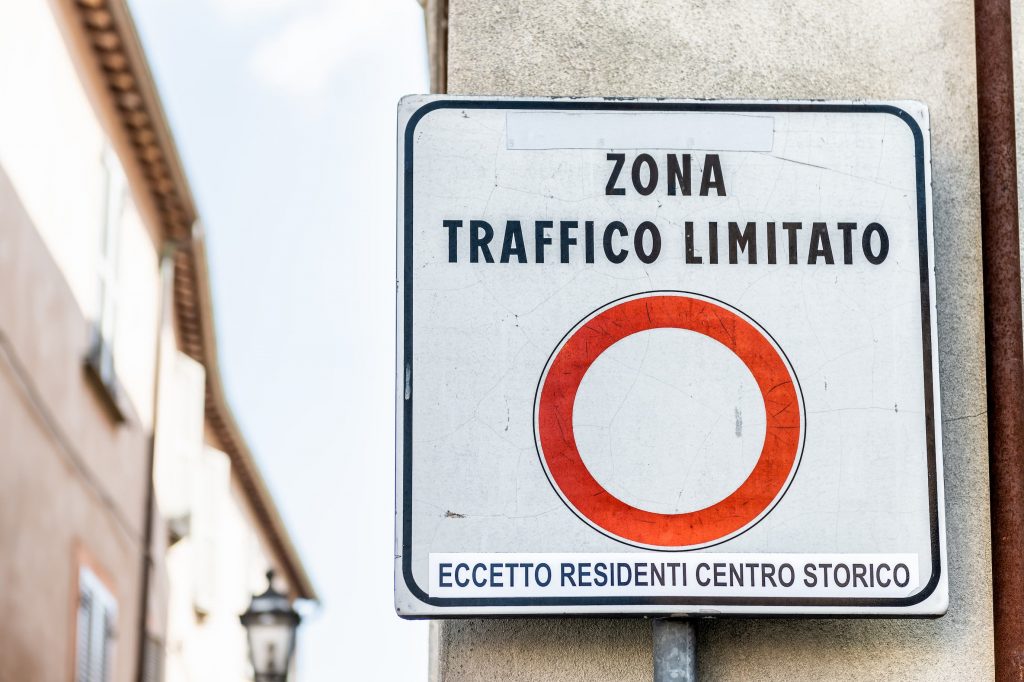 Photo by Zest Car Rental
What a fine costs: usually somewhere between €80 and €330, plus an admin fee from the rental company for passing your details on. And it can arrive months after you get home: Italian police have up to a year to send it to foreign drivers.
How not to get one:
- Assume you can’t drive into any old town. Park outside the centre and walk in. This one rule saves you almost every time.
- Read the gate sign. “Varco attivo” means the zone is active: don’t enter. “Varco non attivo” means it’s open right now.
- Don’t trust Google Maps. It happily routes you straight through ZTLs and doesn’t know the hours. Follow the road signs.
- Staying inside a ZTL? Give your accommodation your number plate before you arrive. They can register it so you can drive in to drop off luggage. It only covers that town’s ZTL.
Where you’ll meet them on a Catania–Syracuse–Taormina trip:
- Catania: the historic centre has a ZTL with electronic gates.
- Ortigia (Syracuse): almost the whole island is a ZTL, with gates just after the bridges. From April to October it’s active almost every day, often into the night; the rest of the year mostly on weekends. Park at the entrance to the island and walk.
- Taormina: the old town is mostly pedestrian, with access restricted at busy times. Park in a car park below the centre (Lumbi or Porta Catania) and take the free shuttle up.
Driving times in Sicily
Sicily is bigger than it looks on a map, and driving takes longer than you’d think. These are typical driving times without stops or traffic:
| Route | Distance | Driving time |
|---|---|---|
| Catania – Syracuse (my trip) | about 65 km | about 1 hour |
| Catania – Taormina (my trip) | about 55 km | 45 minutes to 1 hour |
| Catania – Palermo | about 210 km | about 2h 25m |
| Catania – Agrigento | about 155 km | about 1h 50m |
| Palermo – Agrigento | about 130 km | about 2 hours |
| Palermo – Cefalù | about 75 km | about 55 minutes |
Getting in and out of Catania always took us longer than the map said, because of the city traffic. Add a buffer for that.
Which airport to fly into
- Catania for the east: Etna, Taormina, Syracuse and Noto.
- Palermo for the west: Cefalù, Trapani and the west coast.
- Both? Fly into one and out of the other with a one-way rental. It saves you driving back across the island.
Can you drive up Mount Etna?
Yes. On the south side, a road climbs to Rifugio Sapienza at about 1,900 m, where you can park, walk around the Silvestri Craters and take the cable car higher up. I didn’t drive up myself. Etna is an active volcano, so check the current conditions before you go, as eruptions can close the roads and the summit.
Sicily tolls: which roads you pay for
Most roads in Sicily are toll-free, including the Palermo–Catania motorway (A19) and the road from Catania towards Syracuse. You pay on the two motorways to and from Messina: Catania–Messina (A18), which you’ll use to get to Taormina, and Palermo–Messina (A20). Take a ticket when you enter and pay by card or cash at the exit.
Parking in Sicily
Parking in cities can be scarce, so if you find a spot, take it. The colours tell you everything:
- Blue lines: paid parking
- White lines: free
- Yellow lines: residents or permit holders only. Don’t park there.
Parking is usually free at night, on Sundays and on public holidays, and the hours are on the sign. If that sounds complicated (I think it is), download EasyPark. That’s what we used. It shows the price per hour for your spot, doesn’t charge you outside paid hours or on holidays, and takes your card, so you don’t need cash. Just remember to stop the parking in the app when you leave. Still keep a few coins, as some older machines don’t work with the app.
If you’re staying in a town centre, look for accommodation with parking outside the ZTL. You can filter for it on Booking.com.
Fuel, signal and getting lost
- Fuel: many staffed petrol stations close in the early afternoon (roughly 1:30 to 4:30 pm), but the self-service pumps keep working. Don’t let the tank run low before lunch.
- Signal: coverage can drop in the mountains and the interior. Download offline maps before you set off and get an eSIM (or a local SIM) so you have data for navigation and emergency calls.
What driving in Sicily cost me
Three days, a small manual car, three of us sharing. Prices in euros, with dollars at about €1 = $1.12 (October 2026).
| What | € | $ |
|---|---|---|
| Car rental, 3 days, basic cover | €49 | $55 |
| Per person, split three ways | about €16 | about $18 |
| Deposit (held on the card, returned) | €650 | $728 |
On top of that we paid for fuel, a short toll on the way to Taormina and some EasyPark parking. I didn’t keep track of those, but none of them were big enough to remember. Split between friends, a car in Sicily can easily cost less than buses for everyone, and it gets you to places buses don’t reach.
Driving in Sicily as a woman
For me, the stress in Sicily wasn’t about safety, it was everything on the road: the traffic, and the people too. Pedestrians would just walk down the middle of the road as if cars didn’t exist, so slow right down in towns. If you’re driving solo for the first time, a few things make it easier: pick up and drop off the car in daylight, avoid driving into city centres at night, keep valuables out of sight when you park (take your bag with you rather than leaving it on the seat), and save the rental company’s breakdown number in your phone before you leave the airport.
Driving in Sicily FAQ
Is driving in Sicily hard? In Catania and Palermo, yes, it’s chaotic. Between cities and in the countryside, it’s easy.
Do I need an International Driving Permit for Sicily? Not with an EU licence or a UK photocard licence. Yes with a US or most other non-EU licences.
Are there tolls in Sicily? Only on the Messina motorways (Catania–Messina and Palermo–Messina). Palermo–Catania is free.
How do I avoid ZTL fines in Sicily? Never drive into an old town centre. Park outside, check for “varco attivo” signs, and ask your accommodation to register your plate if you’re staying inside one.
Manual or automatic? Manual is cheaper and much easier to find. Book an automatic early if you need one.
How long does it take to drive from Catania to Palermo? About 2 hours 25 minutes for roughly 210 km, on the toll-free A19 motorway.
Do I need a credit card to rent a car in Sicily? Usually, yes: most companies want a credit card in the driver’s name for the deposit. We used one for our €650 deposit.
What do I need to carry in the car? Your licence (plus an International Driving Permit if you need one), the rental papers, a warning triangle and a hi-vis vest. Rental cars should already have the last two.
Is it worth renting a car in Sicily? Yes. Ours cost €49 for three days (about €16 each for three of us), and it let us see Catania, Syracuse and Taormina on our own schedule.
For more Italy, see my guide to Bari.